


Porcelain Slab Countertops: Pros and Cons
Porcelain slabs shrug off heat, sun and spills. They also chip at the edges and need a fabricator who knows the material. Here are both sides before you pick one.
Porcelain slabs are made from fine clay and minerals. They're pressed into big, thin sheets and fired in a kiln at very high heat. The porcelain slabs in our yards run 1.2cm thick, in panels about 127 by 63 inches.
That's thinner than most granite counters, which run 2cm or 3cm. It's also why one slab can cover a whole island with no seam.
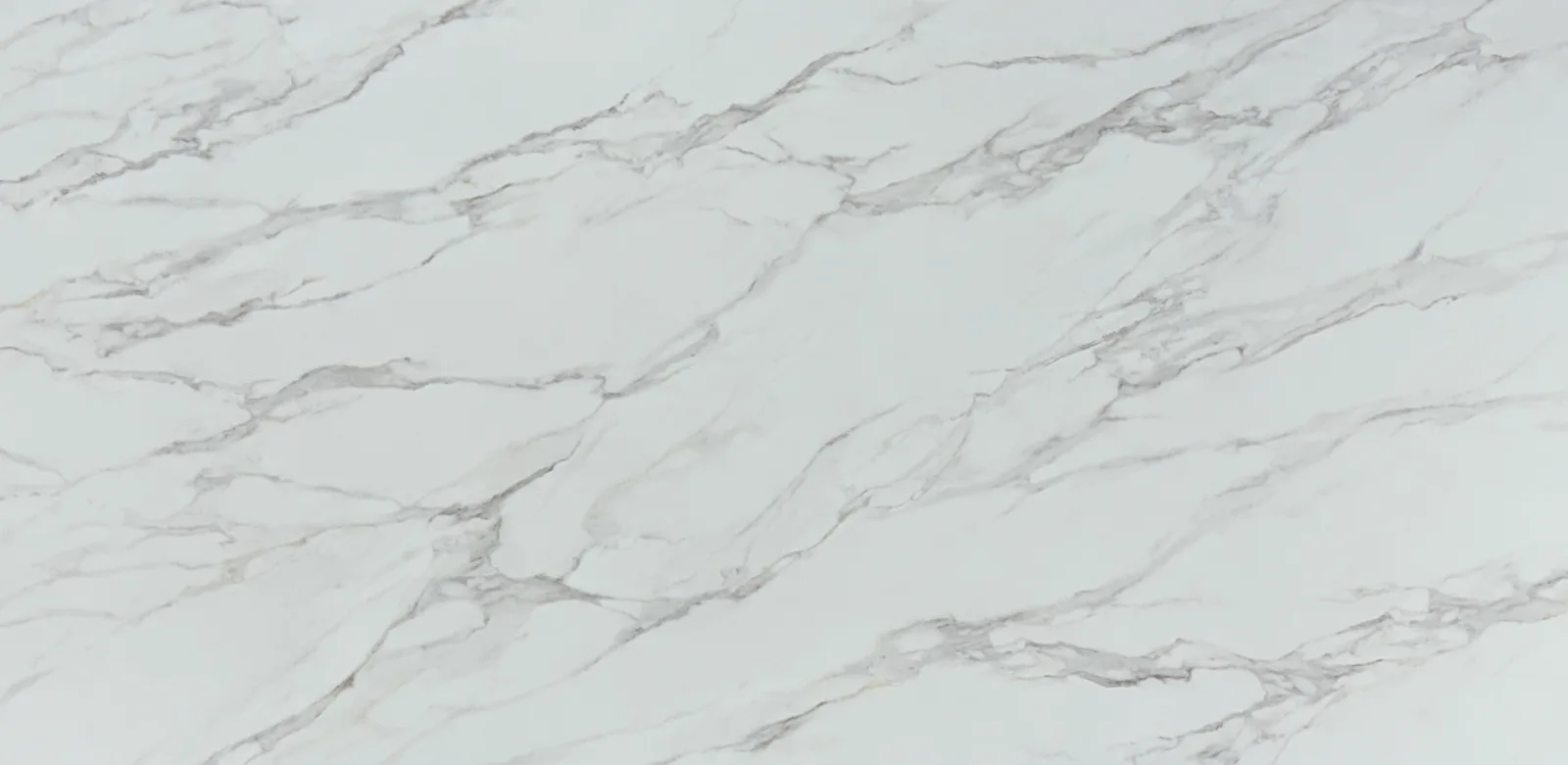
Most porcelain gets its look from a design printed on the surface while it's made. That's how one maker can offer a white marble look, a gold-veined look and a plain gray in the same line. You'll find all three in the Florim colors we carry.
The pros
It takes heat
Porcelain is born in a kiln, so a warm pan won't scorch it. Most makers still suggest a trivet under a pot straight off the burner. It's a good habit on any counter.
The sun can't fade it
UV light doesn't change porcelain's color. That matters in Phoenix, where an outdoor kitchen or a bar top can sit in direct sun all afternoon. Quartz can yellow out there, and some natural stones fade.
Spills wipe right off
Porcelain soaks up almost no water. Wine, coffee and cooking oil sit on top until you wipe them. It never needs sealing, and warm water with a little dish soap handles the daily clean.
It's hard to scratch
The surface holds up to pots sliding across it and the odd knife slip. Use a cutting board anyway. Grit under a heavy pan can still leave a mark.
Big panels, steady pattern
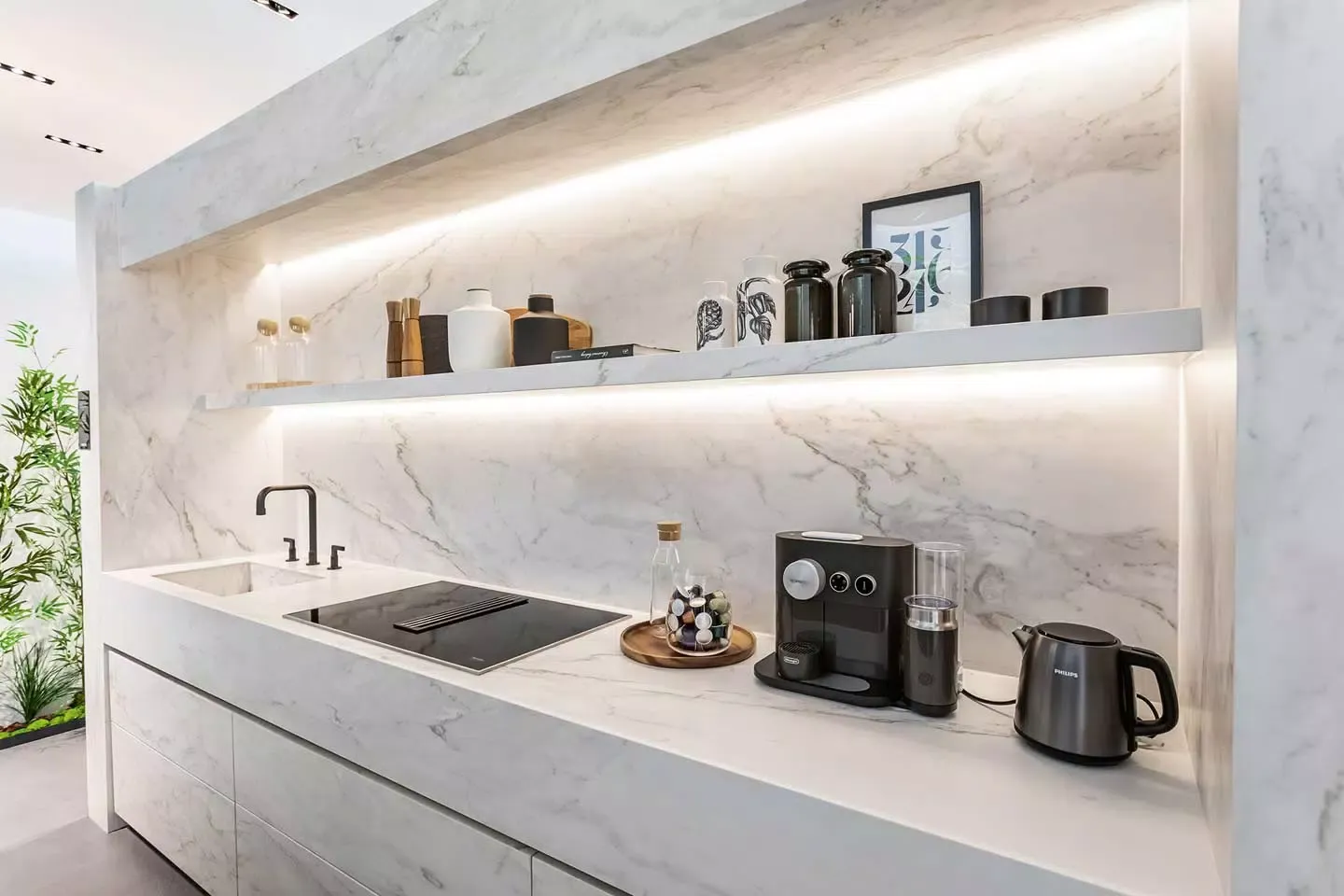
Large panels mean fewer seams. The pattern stays even from slab to slab, which helps when a counter, a backsplash and a wall all need to match.
Glossy or matte
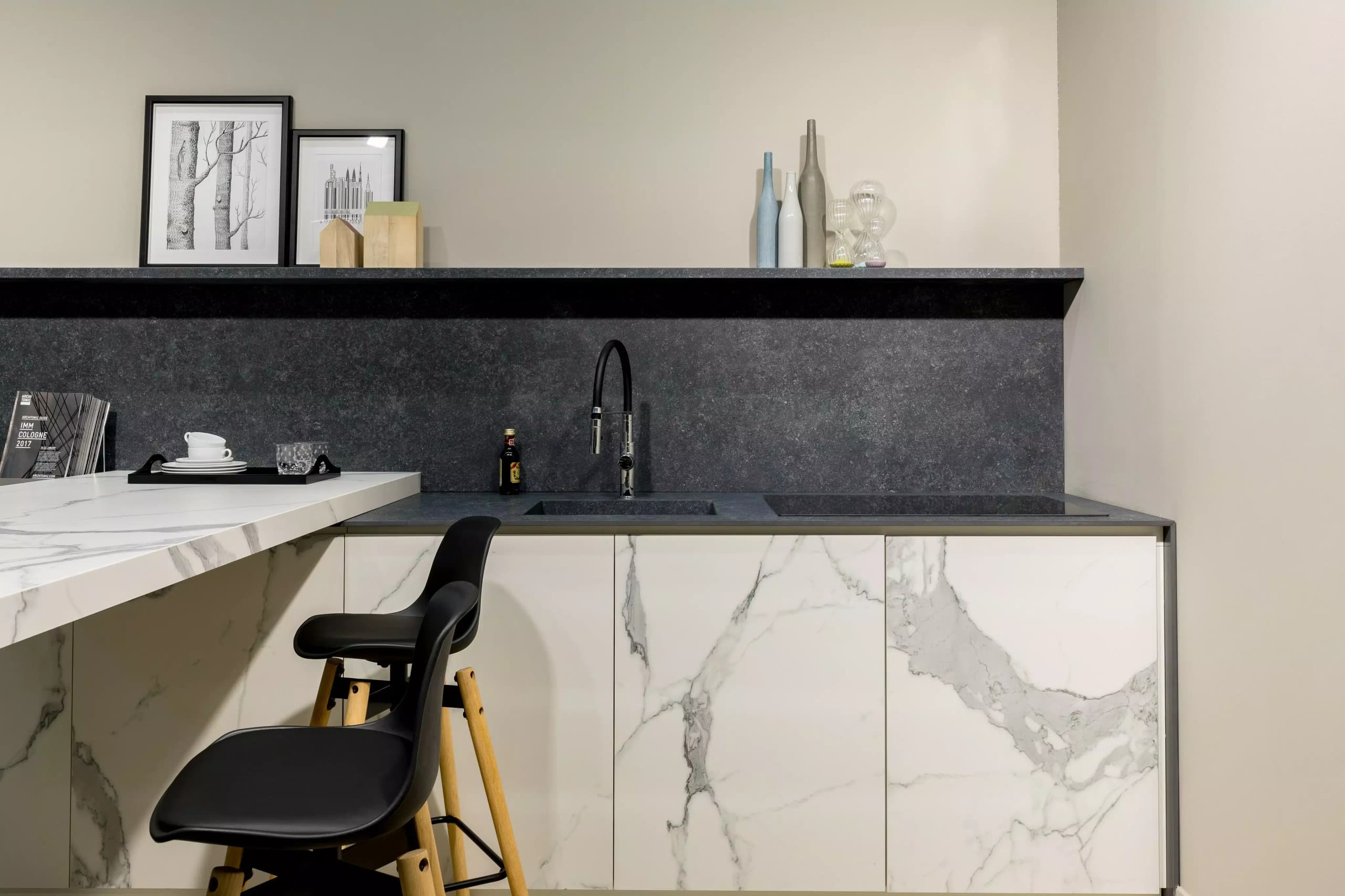
Many Florim colors come in both a glossy and a matte finish. Glossy looks closest to polished marble. Matte softens glare and suits an outdoor top in bright sun.
A cooktop can hide under it
Florim porcelain is an approved surface for Invisacook, the induction cooktop that sits below the counter. You cook on marked zones, and the counter stays one clean surface.
The cons
Edges can chip
A porcelain slab is tough on top but weaker at its edges and corners. A cast iron pan knocked against the edge can take a chip out. Ask your fabricator about a softened or mitered edge, which holds up better than a sharp square one.
Fewer edge shapes
When the pattern is printed on top, a deep curved edge would cut through it. You'd see the plain body underneath. Most porcelain counters get a simple eased edge, or a mitered edge that carries the pattern down the side.
Not every fabricator works with it
Porcelain cuts differently than granite. It needs the right blades, slower cuts and careful handling of a big, thin sheet. Ask how many porcelain jobs your fabricator has done before you commit.
Big slabs need careful hands
A full panel is long and thin, so it can flex if someone carries it flat. Crews move porcelain upright on racks and frames made for it. That's one more reason to hire a fabricator who has done it before.
Repairs show more
A chip in granite can be filled and polished until it nearly disappears. A chip in porcelain can be filled too, but the patch is easier to spot. The pattern sits on the surface, so there's no matching stone below it.
Up close, it's a copy
Porcelain can pass for marble from across the room. Up close, the pattern can repeat from slab to slab. Some people miss the depth of a real stone. Others like knowing exactly what they'll get.
Porcelain or natural stone
Care, side by side
Porcelain needs no sealer at all. Granite and quartzite take a seal before install and do well with a fresh coat now and then. Marble needs a seal too, and acids still etch it.
Quartz, like our AcarAStone line, skips the sealer as well. It isn't made for full sun, though. Outside is where porcelain wins.
Questions for your fabricator
- How many porcelain jobs have you done this year?
- Which edge do you suggest for my counter, and why?
- Where will the seams fall on my layout?
- What happens if a corner chips during install?
Which one fits
Pick porcelain for an outdoor kitchen or a sunny bar top. It also fits a kitchen that wants a marble look with no sealing. Pick natural stone for deep veins, a thick shaped edge, or a slab no one else will ever have.
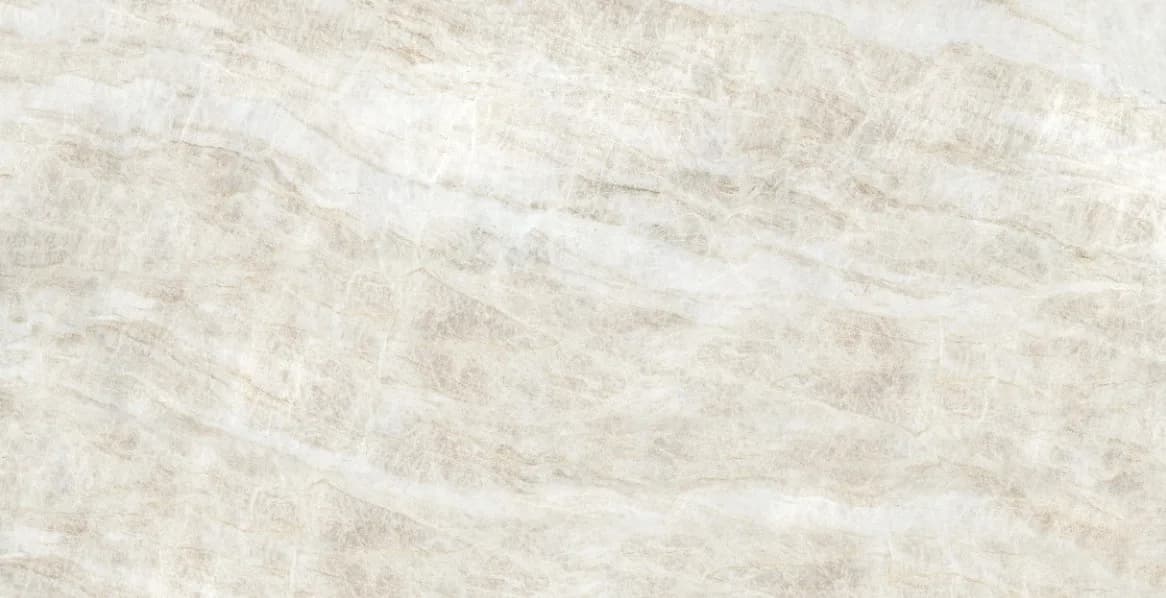
If it's the marble look you're after on a busy counter, look at white quartzite too. It's a very hard natural stone that resists etching.
Still torn? Compare them in person. We carry Florim and Dekton porcelain next to the granite, marble and quartzite they copy, so you can see the real thing and the porcelain version in one visit. See the porcelain in our yards before you come.
Next step
Come walk the yard.
No appointment needed. Open 8:00 AM to 4:00 PM, Monday through Saturday.