


Stone Identification
Cleaning products that are safe on one stone can ruin another. It comes down to one question: is your stone siliceous or calcareous?
Know your stone
Natural stone falls into two camps. Siliceous stoneis built mostly of silica or quartz-like particles. It’s durable and handles mild acidic cleaners: granite, slate, sandstone, quartzite, brownstone, and bluestone all belong here.
Calcareous stone is mostly calcium carbonate, and acid attacks it. Marble, travertine, limestone, and onyx are calcareous. A cleaner that works fine on granite can etch marble on contact.
The acid test
A drop test settles it. You’ll need an eyedropper and either a 10% muriatic acid solution or plain household vinegar. The test can permanently etch the spot, so pick a hidden corner, several inches away from any mortar joint.
Apply a few drops over an area the size of a quarter. If the drops fizz and bubble, the stone is calcareous. Little or no reaction means siliceous. Rinse with clean water and wipe dry. A surface sealer can mask the result; if one is present, chip a small piece and test the fresh face instead.
Caution: muriatic acid is corrosive and hazardous. Protect your eyes and skin when you handle it.
Stone finishes
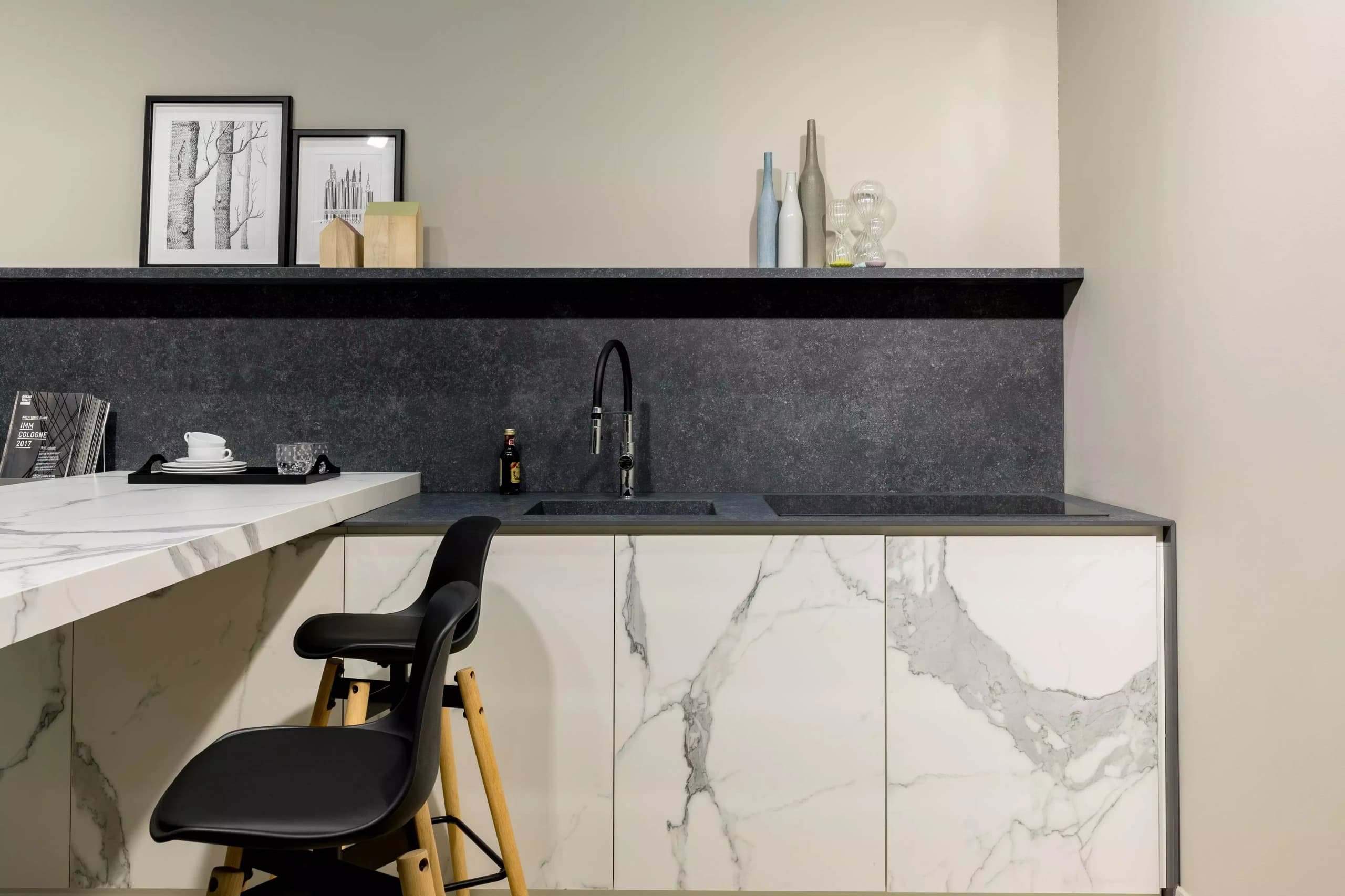
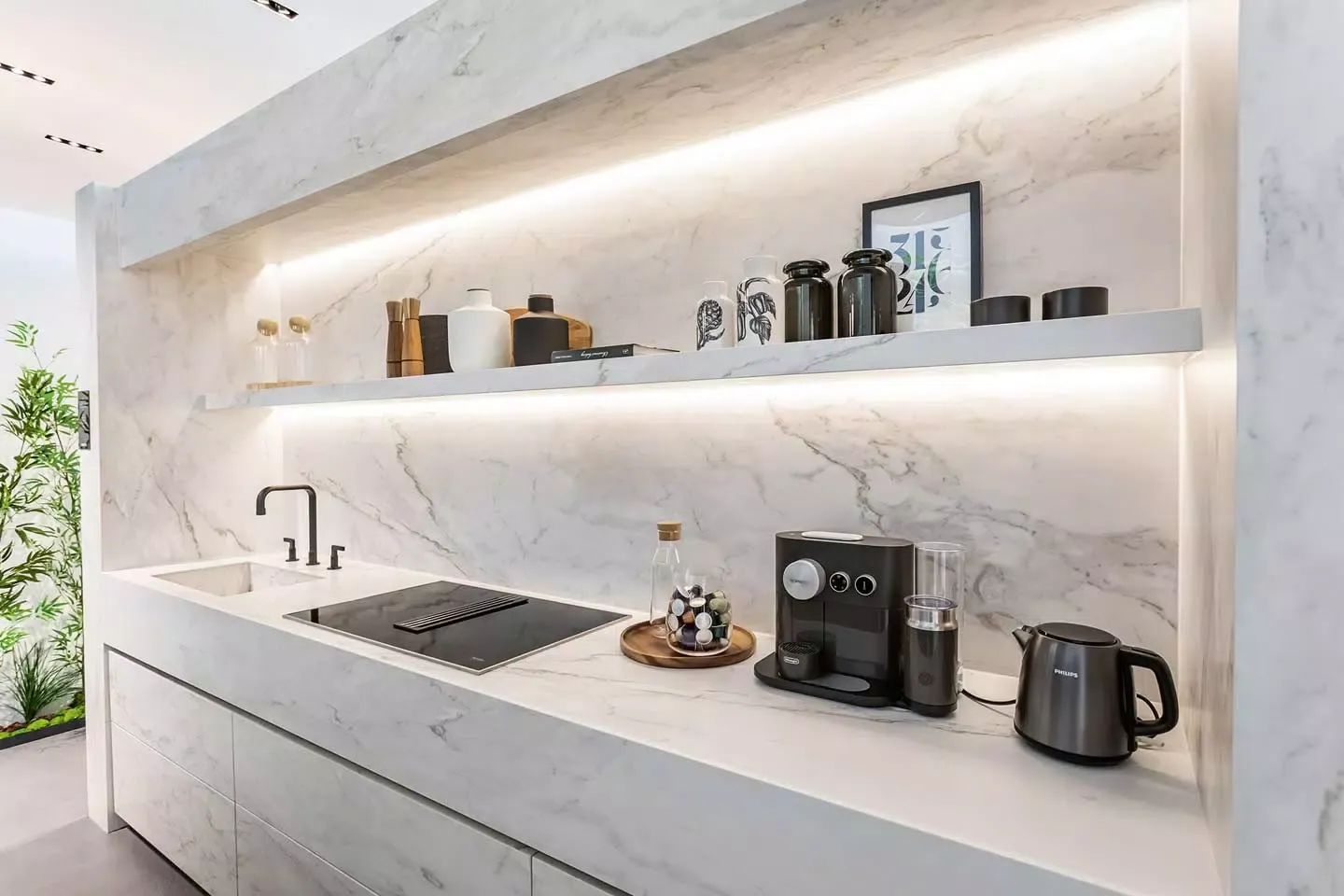
A polishedfinish is glossy. It reflects light and shows off the stone’s color and marking, common on walls, furniture tops, and floor tile.
A honedfinish is satin smooth with little reflection. It’s the pick for floors, stair treads, and thresholds, anywhere heavy traffic would wear a polish away.
A flamed finish is rough and textured, used most often on granite floor tile where grip matters.
Colors and appearance
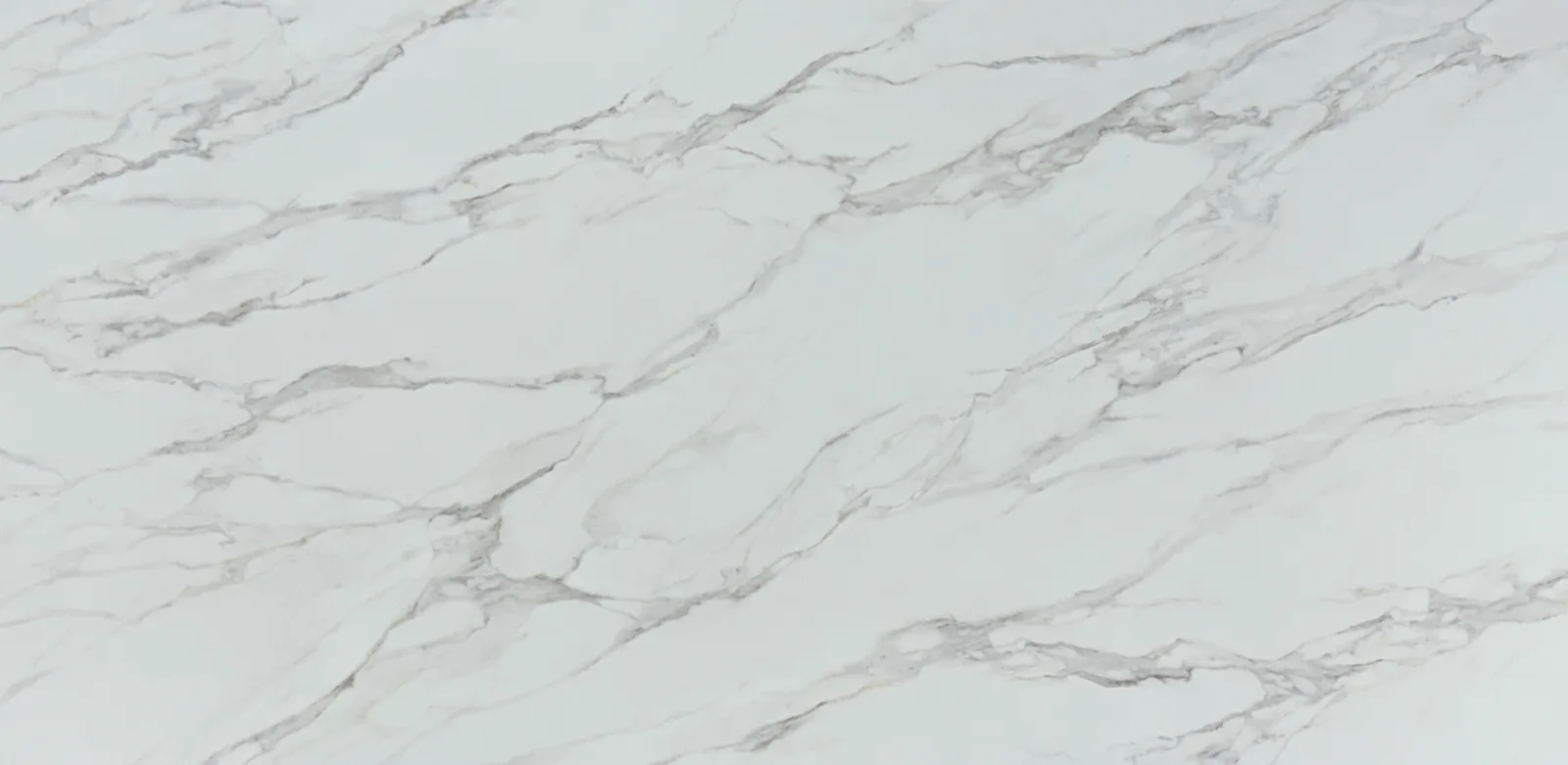
Granite and marble come out of quarries worldwide in a huge range of colors. You can usually tell them apart by eye: marble shows veins, while granite’s minerals appear as small flecks spread evenly through the stone.
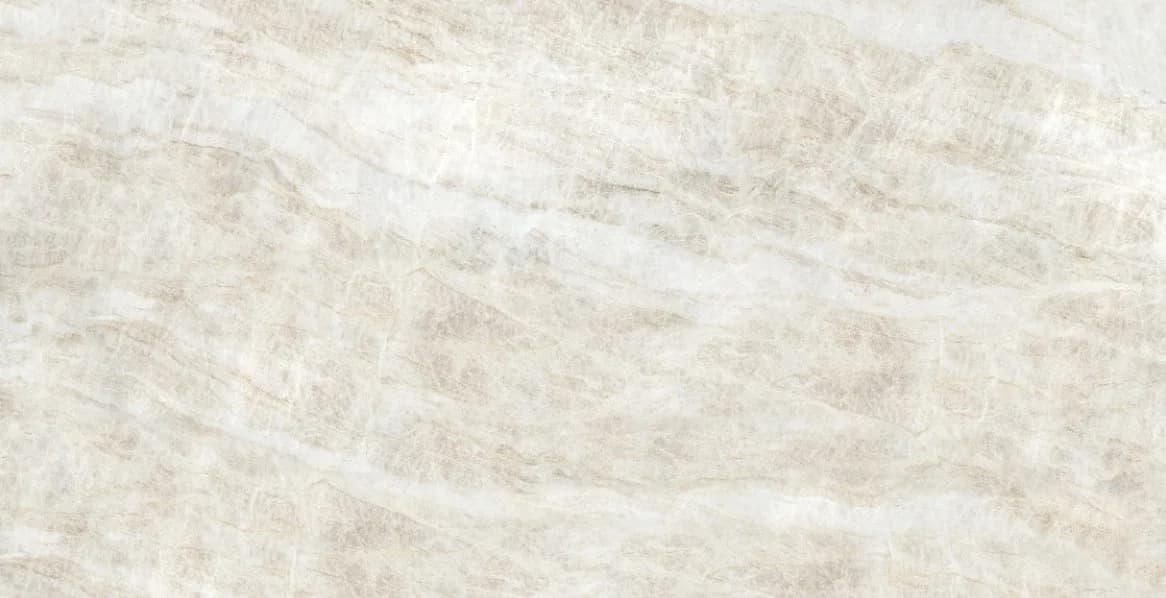
Sandstone runs light gray to yellow to red. The dark reddish-brown version is brownstone; bluestone is a dense, fine-grained sandstone in greenish or bluish gray. Limestone is typically light gray, tan, or buff, and often carries visible fossils. Slate comes in dark green, black, gray, dark red, or mixed colors, with its signature cleft texture.
Sealer test
Sealer on a paper towel. Tap for sound.
Stone care
A sealer keeps water on the surface.
Watch the water sit on top of the paper towel instead of soaking in. The towel was treated with sealer, and stone works the same way. Sealer fills the tiny spaces in the stone, so olive oil, red wine and Saturday morning coffee stay on the surface long enough to wipe away.
Granite and quartzite take a seal well. Marble takes one too, and it still earns the patina people fall in love with. Our AcarAStone quartz doesn't need sealing at all.
Ask your fabricator to seal your new stone before it goes in. Then come hand-select your exact slab. We keep 300+ colors on the floor across both Phoenix showrooms.
Next step
Come walk the yard.
No appointment needed. Open 8:00 AM to 4:00 PM, Monday through Saturday.