

Granite vs Quartzite: How to Choose
Both are natural stone, both are hard, and both take the heat of a busy kitchen. They form in different ways, though, and that shows in how they look, how they cut and how they wear.
People mix these two up all the time. The names sound alike, and both sit side by side in our yards. But granite and quartzite are different rocks with different stories.
Here’s what sets them apart, and how to pick the right one for your counters.
How they form and how they look
Granite starts as magma
Granite forms when melted rock cools slowly deep underground. The slow cooling grows crystals of quartz, feldspar and mica. Those crystals are the specks and flecks you see on a granite slab.
That’s why most granite reads as a grain or a speckle, not a vein. Some granites swirl and move a lot, but up close you can still pick out single crystals. Browse the granite in our yardsand you’ll see it right away.
Quartzite starts as sand
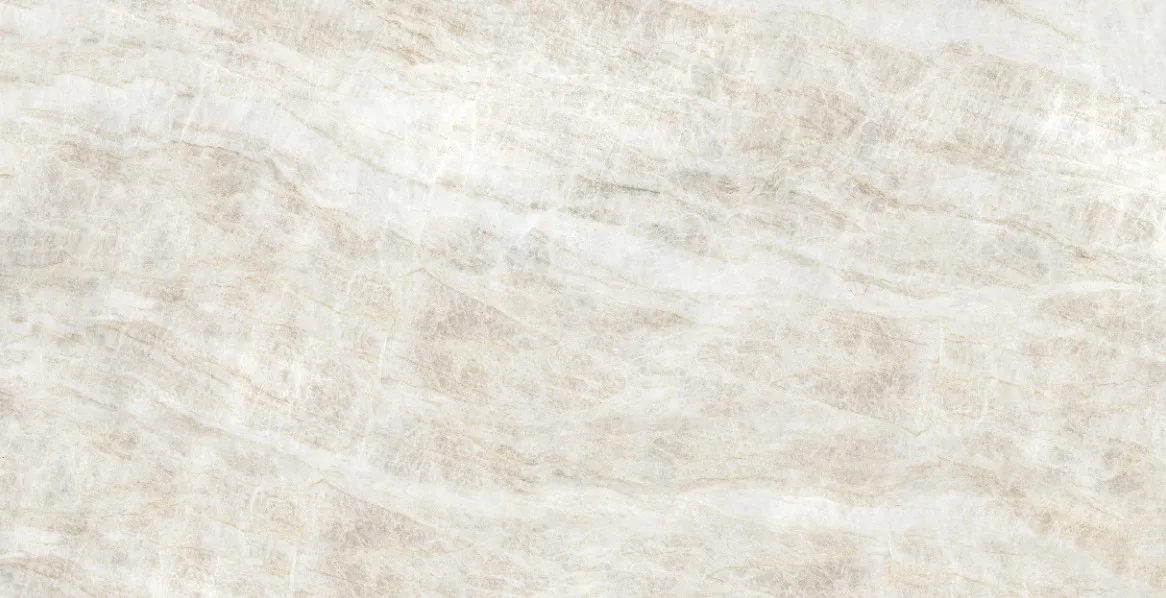
Quartzite begins as sandstone. Heat and pressure fuse the sand grains together until the stone is almost all quartz. The grains melt into each other, so the surface looks glassy and smooth instead of grainy.
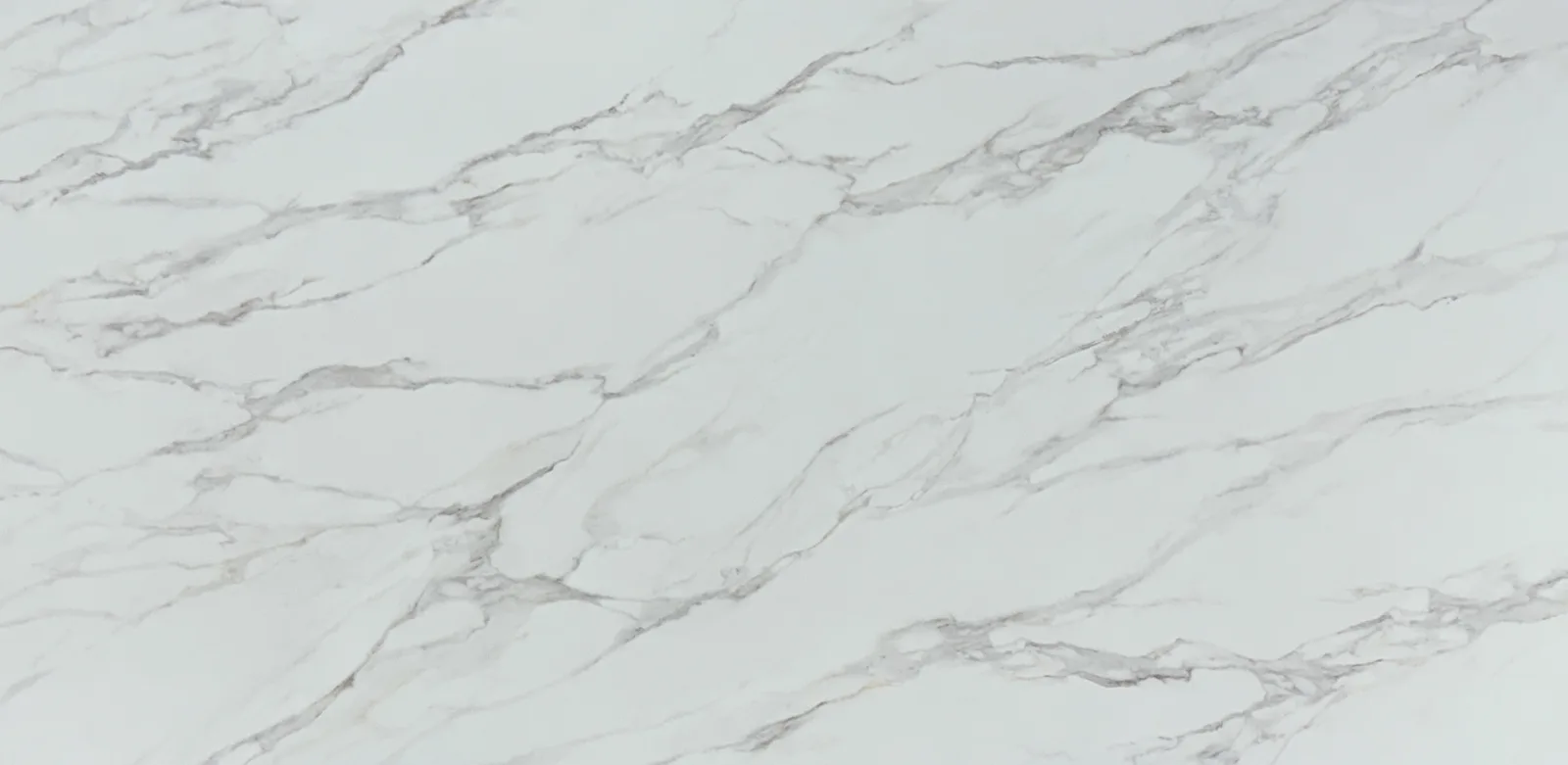
Quartzite tends to flow. Long veins and soft bands of color run across the slab, a lot like marble. That’s the big draw. People who love the look of marble often land on white quartzite or a warm Taj Mahal instead.
Color runs wide on both
Don’t pick by color alone. Granite comes in white, gray, black and blue. Quartzite runs from bright white to cream to deep blue.
How they hold up
Hardness
Both are hard enough for a busy kitchen. Quartzite is usually the harder of the two, because it’s nearly pure quartz. Our stone pages show a hardness from our inventory system when it has one, and most of our quartzites rate higher than our granites.
Harder stone is tough on saw blades. A quartzite job can take your fabricator longer to cut and polish, so ask about that when you get a quote.
Heat
Neither one minds a warm pan. They’re natural stone, formed under far more heat than any stove puts out. Still, a trivet under a pot straight off the burner is a good habit, since it protects the sealer and keeps a fast temperature change off the stone.
Acid and etching
True quartzite and granite both shrug off lemon juice, vinegar and wine. Marble is the stone that etches, and that’s the catch. Some stones sold as quartzite elsewhere are softer, closer to marble, and they can etch.
Test a sample at home before you commit. A knife shouldn’t scratch true quartzite, and a few drops of lemon juice left for a few minutes shouldn’t leave a dull mark. Our stone identification guide walks through the acid test step by step.
We label the soft ones. Our inventory system files a few stones as Quartzite Soft, and the material line on that stone’s page says so. If you see it, treat the slab more like marble: honed hides etching better than polished, and acids get wiped up fast.
Telling them apart in the yard
Look at the surface under the light. Granite shows a grain of separate crystals, some dark and some light. Quartzite looks more like frosted glass, with color that sits in bands and veins.
Then read the stone page. The material line says Granite, Quartzite or Quartzite Soft, straight from our inventory system. Ask one of our stone experts if a slab still has you guessing.
Stains and sealing
Both stones have tiny pores, so oil and wine can soak in if they sit. Ask your fabricator to seal your slab before it goes in. Then wipe spills the same day.
A quick check tells you when it’s time to reseal. Drip a little water on the counter. If it soaks in and darkens the stone, it’s time for a fresh coat.
Finishes
Both come polished, honed or leathered, in 2cm and 3cm. Polished shows the most color and depth. Honed and leathered take the shine down and feel softer to the touch.
Which one fits your kitchen
Pick granite if
- You want a speckled or crystal look, or a bold color like black or blue.
- You want a busy pattern that hides crumbs and daily wear.
Want something no one else on your street has? Look at our exotic granite, the bold slabs that are hard to find.
Pick quartzite if
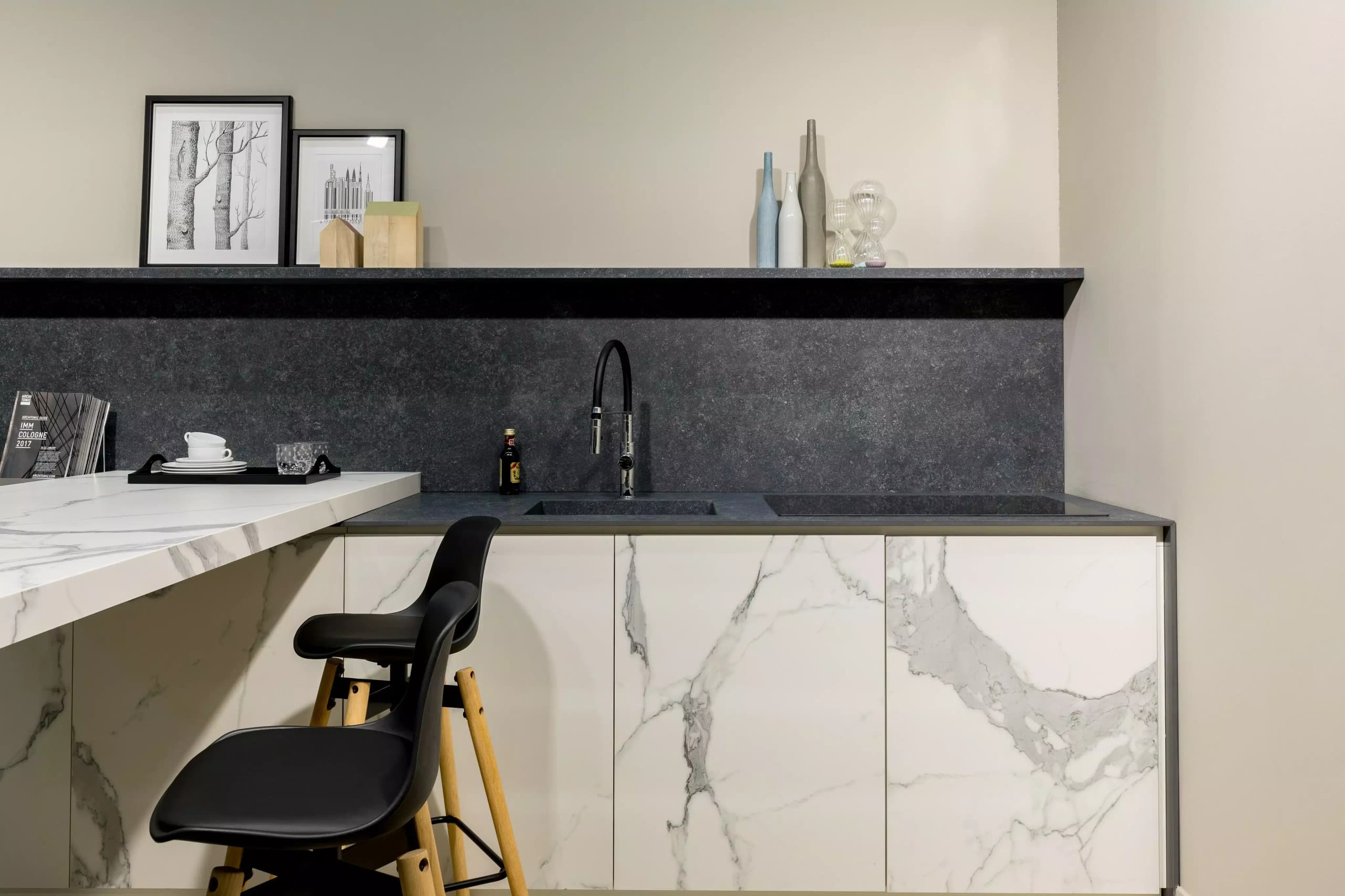
- You love the veins of marble but cook hard and often.
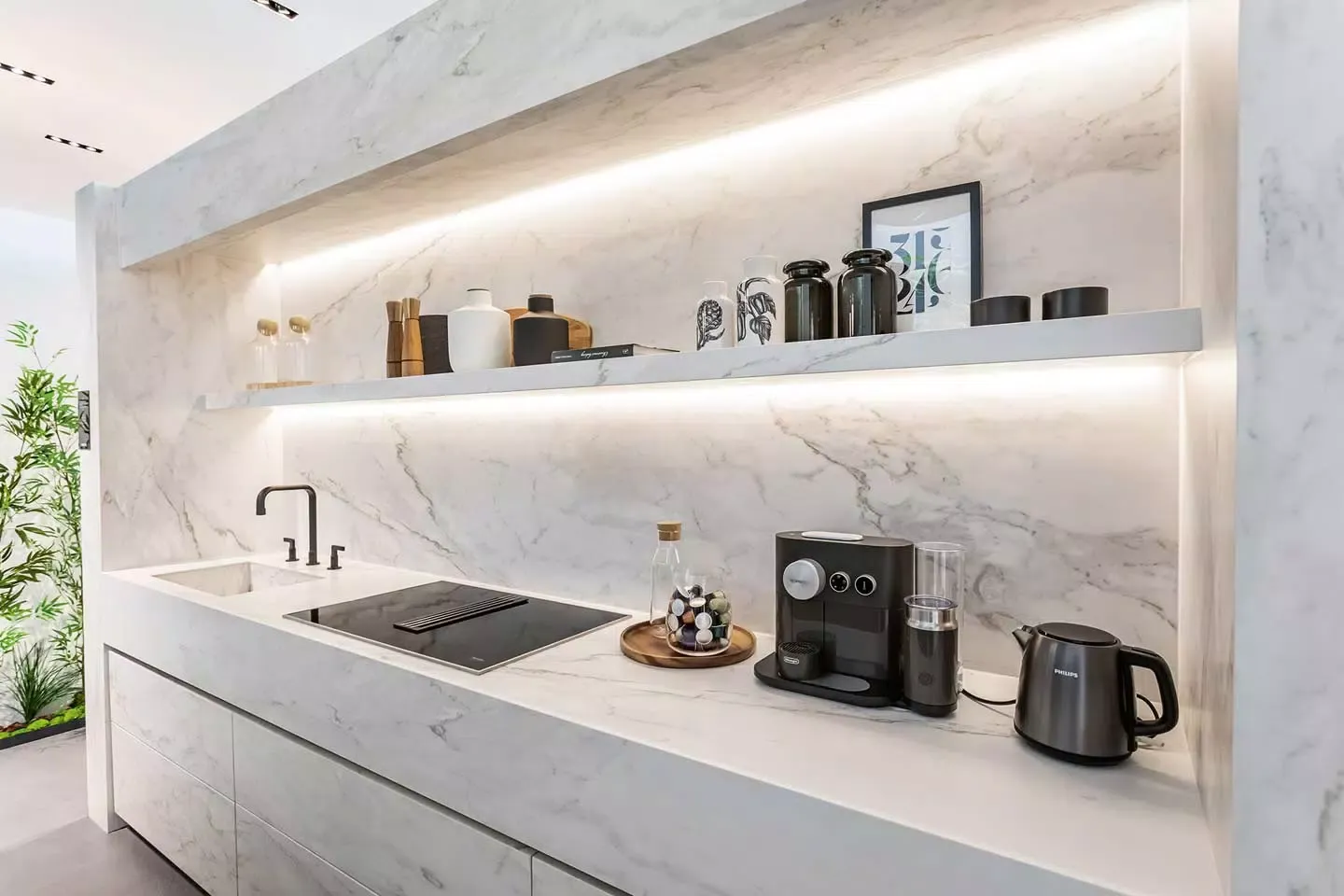
- You want a light, flowing look on a big island.
- You’re planning a waterfall or mitered edge where the veins can wrap.
- You don’t mind a slower fabrication job for a harder stone.
See both in one visit
Photos only go so far. Walk the yard and stand the two side by side, under real light. Bring a cabinet door or a floor sample, and tag the slab you want, no appointment needed. Plan your visit.
Still weighing a man-made surface too? Read our porcelain pros and cons, or see AcarAStone, our own quartz line.
Next step
Come walk the yard.
No appointment needed. Open 8:00 AM to 4:00 PM, Monday through Saturday.